
Whipping up an elegant Pavlova always takes me back to those cozy family gatherings where simplicity meets splendor. This delightful dessert, with its crisp crust and marshmallow-like center, is a family staple that never fails to impress. The contrast of the crunchy shell and soft interior commands attention on any dessert table.
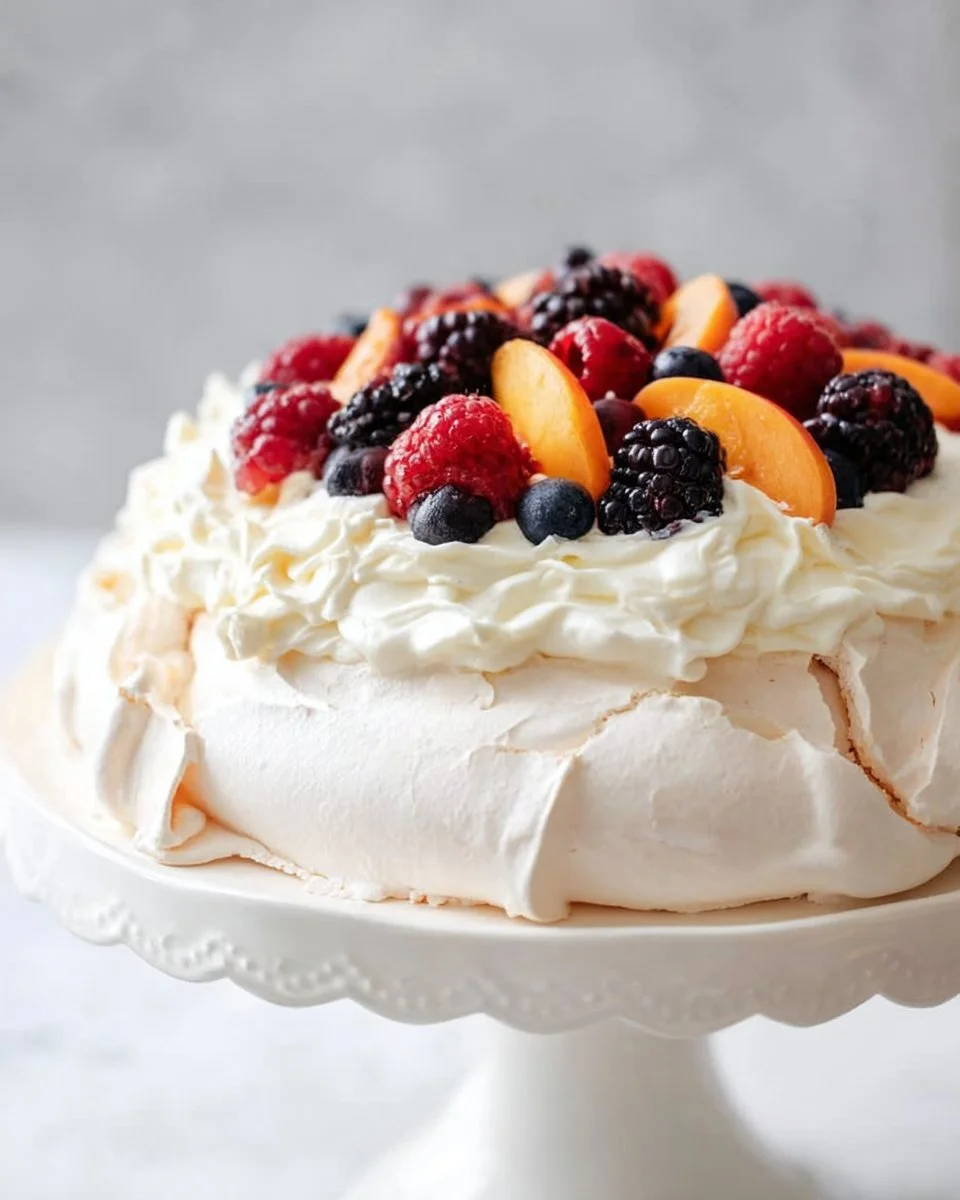
Making a pavlova is about as enjoyable as indulging in it, blending ease and artistry. This recipe continues to win hearts, not only for its ease but the perfect balance of sweetness and fruitiness. Whether you are a seasoned baker or just starting, this recipe will guide you to a rewarding and visually stunning treat.
Jump to:
Why You’ll Love This Recipe
- Ease of Preparation: Simple ingredients come together with straightforward steps for a stress-free dessert.
- Stunning Presentation: The pavlova's crispy shell and luscious interior create a visually impressive dish.
- Versatile Toppings: Personalize the pavlova by using your favorite fresh fruits for added flavor and color.
- Light and Airy Texture: The combination of a crispy exterior and soft center creates a satisfying contrast.
- Perfect for Gatherings: It’s an elegant dessert option that will delight guests at any occasion.
Ingredients You'll Need
- Baker's Sugar – 1 cup. Provides a fine texture that dissolves quickly in the egg whites.
- Cream of Tartar – ½ tsp. Helps stabilize the egg whites to maintain their stiffness.
- Cornstarch – 1 tbsp. Ensures a smooth, marshmallow-like center.
- Egg Whites – 4. Essential for creating the base meringue.
- Heavy Cream – 6 ounces. Adds luxurious richness to the topping.
- Sugar – 1 tbsp. Sweetens the whipped cream topping.
- Fresh Fruit – A colorful and fresh topping that balances the sweetness with a hint of tartness.
How to Make Pavlova
Step 1: Prepare the Oven and Pan
Preheat your oven to 275 degrees. Line a flat cookie sheet with parchment paper to prevent the pavlova from sticking.
Step 2: Mix Dry Ingredients
In a small bowl, mix together the sugar and cornstarch until well combined.
Step 3: Beat the Egg Whites
Separate the egg whites and place them in a mixing bowl. Beat them with a mixer at medium speed. Once they turn foamy, add the cream of tartar and continue beating for about 4 minutes.
Step 4: Incorporate the Sugar Mixture
Increase the mixer speed and gradually add the sugar mixture, pausing between additions to ensure it is well combined. Continue whipping until the mixture is smooth and glossy.
Step 5: Shape and Bake the Pavlova
Take the meringue mixture and shape it into an 8-inch circle on the parchment-lined sheet. Bake in the preheated oven, then turn off the heat and let the pavlova cool inside the oven, undisturbed, for several hours.
Step 6: Add Toppings
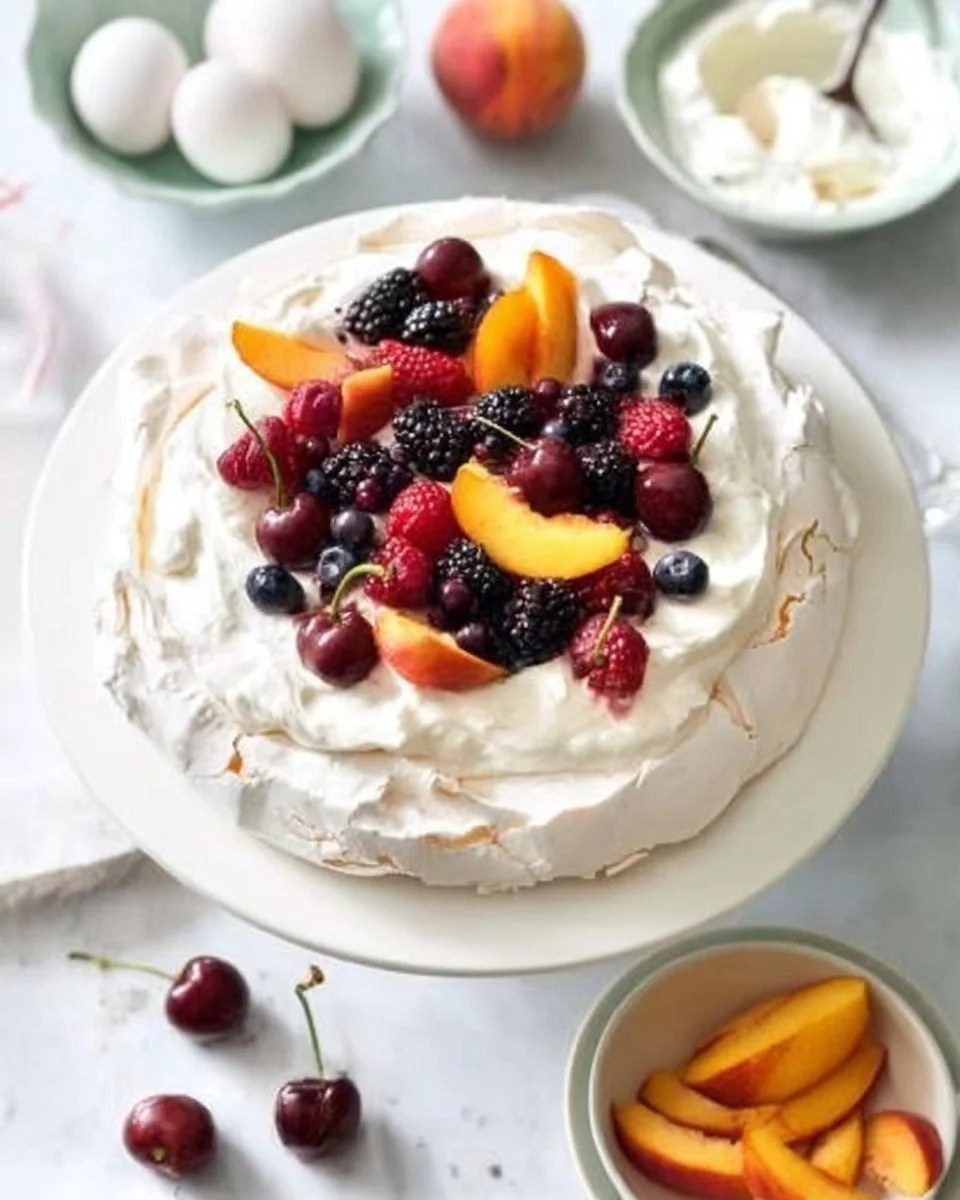
Whip the heavy cream with a bit of sugar until soft peaks form. Once the pavlova has cooled completely, top it with the whipped cream and an array of fresh fruits.
Pro Tips from My Kitchen
✓ Use Room Temperature Egg Whites – Make sure your egg whites are at room temperature to achieve maximum volume when whipped.
✓ Gradual Sugar Addition – Add sugar slowly and in batches. This ensures it dissolves completely, preventing a grainy texture.
✓ Avoid Overcooking – Stay cautious with baking time. Leaving it to cool in the turned-off oven helps prevent cracks.
✓ Shape with Care – Use a spatula to spread the meringue into an even circle. This helps create a uniform shape.
✓ Fresh Fruit Selection – Choose fruits that are firm yet ripe for optimal texture and taste balance with the sweet meringue.
What Makes This Recipe Work
- The combination of sugar and cornstarch in the meringue creates a stable structure with a soft, chewy center, essential for a classic pavlova texture.
- Cooling the pavlova in the oven slowly allows it to set gradually, preventing cracks and ensuring a beautiful finish.
- Whipping the egg whites to the right consistency is crucial for maintaining the structure and height of the pavlova, resulting in an impressive presentation.
Frequently Asked Questions About Pavlova
If you're looking for a substitution, superfine sugar is a viable alternative to baker's sugar. It blends well without affecting texture too much.
Minor cracks are common and can be concealed with whipped cream and fruits. To minimize large cracks, ensure a slow cooling process by leaving it in the oven until completely cooled.
To store leftovers, cover the pavlova loosely with aluminum foil and refrigerate. Keep it in a dry place to maintain the meringue's texture as much as possible.
High humidity can cause pavlova to become sticky or weep. Ensure that the sugar is fully dissolved and don't bake on a rainy day if possible.
Traditional choices include kiwi, strawberries, and passion fruit. However, you can use any seasonal fruits that you enjoy, like berries or mango, for added color and flavor.
Classic Pavlova Recipe
Ingredients
- 1 cup Baker's Sugar
- 0.5 teaspoon Cream of Tartar
- 1 tablespoon Cornstarch
- 4 large Egg Whites
- 6 oz Heavy Cream
- 1 tablespoon Sugar
- to taste various Fresh Fruit
Instructions
- Preheat your oven to 275 degrees. Line a flat cookie sheet with parchment paper to prevent the pavlova from sticking.
- In a small bowl, mix together the sugar and cornstarch until well combined.
- Separate the egg whites and place them in a mixing bowl. Beat them with a mixer at medium speed. Once they turn foamy, add the cream of tartar and continue beating for about 4 minutes.
- Increase the mixer speed and gradually add the sugar mixture, pausing between additions to ensure it is well combined. Continue whipping until the mixture is smooth and glossy.
- Take the meringue mixture and shape it into an 8-inch circle on the parchment-lined sheet.
- Bake in the preheated oven, then turn off the heat and let the pavlova cool inside the oven, undisturbed, for several hours.
- Whip the heavy cream with a bit of sugar until soft peaks form.
- Once the pavlova has cooled completely, top it with the whipped cream and an array of fresh fruits.
Notes
- Use room temperature egg whites for maximum volume.
- Add sugar gradually to avoid a grainy texture.
- Be cautious with baking time to avoid overcooking.
- Choose ripe yet firm fruits for optimal taste balance.
Leave a Reply