
When I first tasted Bibimbap, I was immediately captivated by the harmony of flavors it brought together. This Korean dish combines a variety of textures, from the tender beef to the perfectly cooked vegetables. Each bite is a delightful combination that keeps you wanting more.
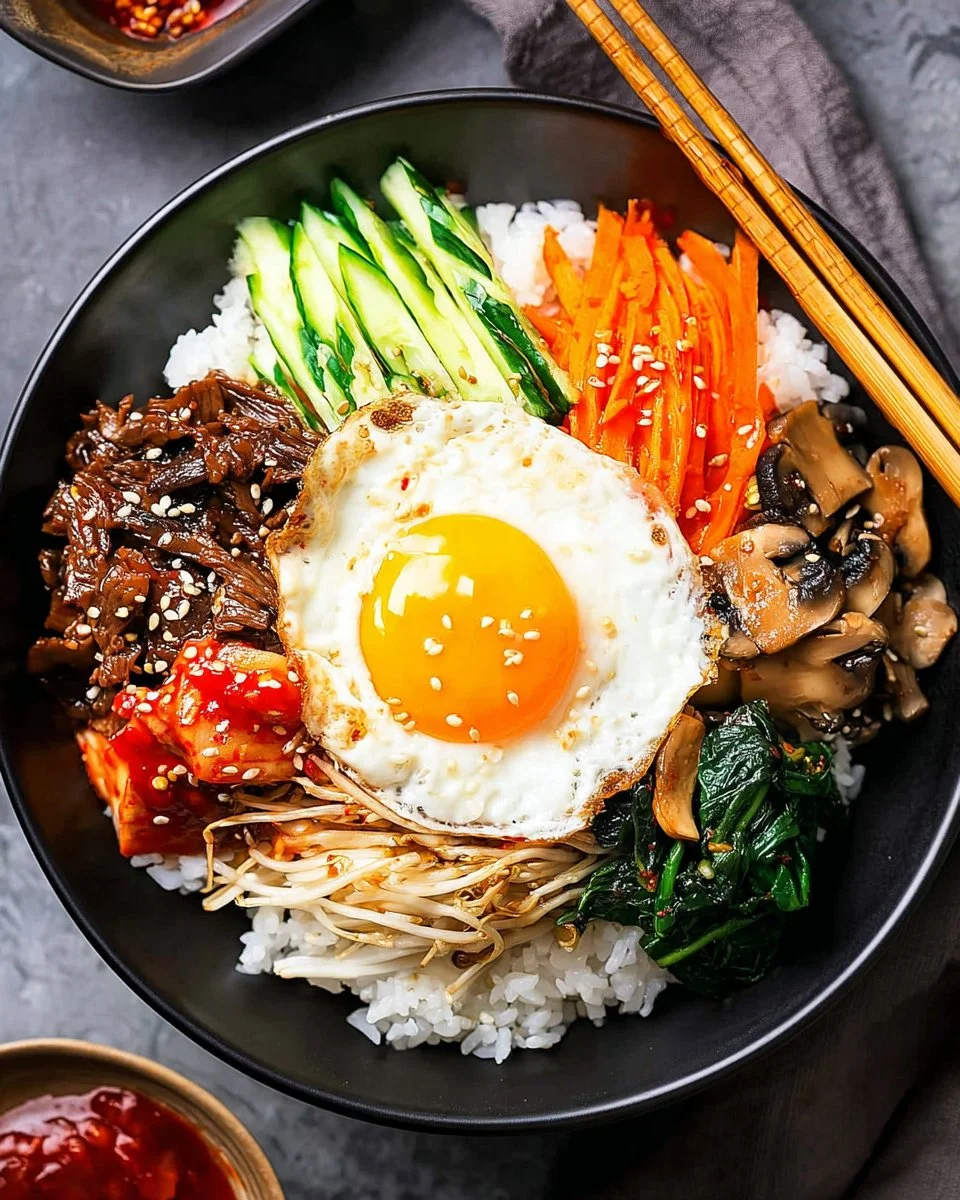
Preparing Bibimbap in my kitchen has become a ritual. The meditative process of arranging the ingredients and watching them transform into a beautifully balanced meal is incredibly rewarding. With each step, you create a dish that's not only delicious but visually stunning, making it perfect for both everyday dinners and special occasions.
Jump to:
Why You’ll Love This Recipe
- Flavor Explosion: The mix of ingredients delivers diverse flavors, from spicy Gochujang to savory sesame oil.
- Vibrant Presentation: A visually appealing dish with colorful vegetables and garnishes.
- Versatility: Easily adaptable to your choice of protein or vegetarian options.
- Hearty and Satisfying: It combines protein, vegetables, and rice, ensuring a complete meal.
- Cultural Experience: Provides a taste of Korean cuisine right from your kitchen.
Ingredients You'll Need
- Cooked White Rice – 5 cups, preferably short grain for sticky texture that holds well.
- Eggs – 4, to top each serving for added richness.
- Toasted Sesame Seeds – For garnish, adding nutty flavor.
- Beef Tenderloin or Top Sirloin – ½ pound, thinly sliced for tenderness.
- Asian/Nashi Pear – ¼, grated to tenderize and sweeten beef.
- Low Sodium Soy Sauce – 1 tablespoon, enhances savory taste.
- Brown Sugar – 1 tablespoon, provides sweetness.
- Rice Wine – 2 teaspoons, for flavor depth.
- Toasted Sesame Oil – 2 teaspoons, for flavor in marinades.
- Gochujang Paste – 1 teaspoon, for adding spicy notes.
- Garlic Cloves – 2, minced to enhance seasoning.
- Ground Ginger – ¼ teaspoon, for warmth and aroma.
- Onion Powder – ¼ teaspoon, adds subtle sweetness.
- Pepper – To taste, for seasoning.
- Vegetable or Peanut Oil – For cooking, provides a neutral base.
- Dried Shiitake Mushrooms – 3 ounces, bring earthy depth.
- Bean Sprouts – 8 ounces, offer crunchiness.
- Chopped Green Onions – 1 tablespoon, for fresh garnish.
- Carrots – 2, sliced for color and sweetness.
- Zucchini – 2 large, sliced for freshness.
- Baby Spinach – 8 ounces, adds color and nutrients.
- Salt – 1 teaspoon, divided for seasoning vegetables.
- Toasted Sesame Oil – 3 ½ teaspoons, divided to cook vegetables.
- Toasted Sesame Seeds – 2 ½ teaspoons, divided for texture and taste.
- Minced Garlic – 1 tablespoon + ½ teaspoon, divided for flavor enhancement.
- Reduced Sodium Soy Sauce – 1 teaspoon, for healthier seasoning option.
- Gochujang Paste (for sauce) – ¼ cup, provides the dish’s characteristic heat.
- Rice Vinegar – 2 tablespoons, balances spicy and sweet flavors.
- Reduced Sodium Soy Sauce (for sauce) – 2 tablespoons, for a lighter umami profile.
- Brown Sugar – 1 tablespoon, balances the sauce’s spiciness.
- Toasted Sesame Oil (for sauce) – 1 teaspoon, enhances overall sesame flavor.
How to Make Bibimbap
Step 1: Marinate the Beef
Mix the grated pear, soy sauce, brown sugar, rice wine, sesame oil, Gochujang paste, minced garlic, ground ginger, onion powder, and pepper in a bowl. Add the sliced beef, ensuring even coating, and refrigerate for 30 minutes for flavor infusion.
Step 2: Prepare the Vegetables
Soak the dried shiitake mushrooms in boiling water until softened. Slice the carrots and zucchini; sprinkle with a pinch of salt and set aside. This enhances their natural flavor.
Step 3: Make the Bibimbap Sauce
Combine Gochujang paste, rice vinegar, soy sauce, brown sugar, and sesame oil. Stir until you achieve a smooth sauce. Adjust the level of sweetness to taste.
Step 4: Cook the Vegetables
Steam the bean sprouts until tender yet crunchy. Stir-fry the soaked shiitake mushrooms, carrots, zucchini, and spinach individually in sesame oil, seasoning simply with salt and garlic to preserve their original taste.
Step 5: Cook the Beef
Heat oil in a skillet. Cook the marinated beef until caramelized, ensuring it stays juicy and flavorful. This process brings out the beef’s savory notes.
Step 6: Assemble the Bowls
Place warm rice into bowls as a base. Arrange cooked vegetables and beef on top artfully to highlight colors and textures, creating an appealing presentation.
Step 7: Fry the Eggs
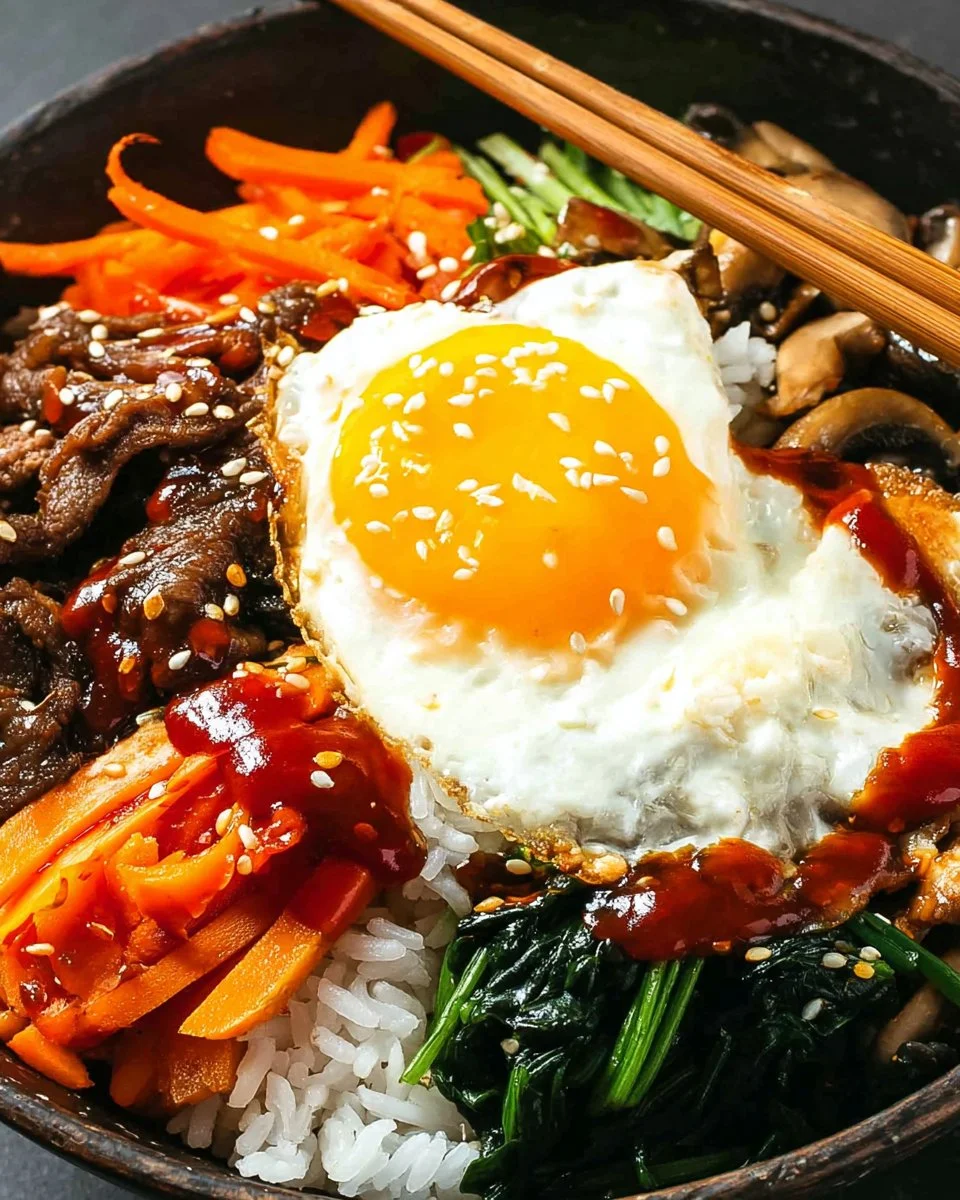
Fry the eggs sunny-side up to maintain the yolk's runny quality. Gently place them on top of each bowl, adding richness to the dish.
Step 8: Garnish and Serve
Sprinkle sesame seeds over the assembled Bibimbap. Drizzle with a bit of sesame oil, and serve with the prepared Bibimbap sauce for each person to adjust to their taste.
Pro Tips from My Kitchen
✓ Perfect Beef Marinade – Grating Asian pear tenderizes the meat and adds sweetness, an essential step for that melt-in-your-mouth texture.
✓ Steaming Done Right – Lightly steaming bean sprouts preserves their crunch and nutrients, offering a pleasant contrast to the soft rice base.
✓ Sauce Balancing – Start with less Gochujang paste if sensitive to spice, as it can overpower other delicate flavors.
✓ Fry Eggs with Care – Keep the yolk runny for a creamier texture that mixes well with the rice, enhancing overall richness.
✓ Vegetables Separate – Cook vegetables individually to maintain their unique flavors and the right level of doneness for each.
What Makes This Recipe Work
- Each ingredient in this Bibimbap is cooked separately, allowing the distinct textures and flavors to shine. This method gives a balance of crunchy, tender, and savory elements in each bite.
- The marinade, featuring soy sauce, pear, and spices, provides depth and tenderizes the beef, enhancing its natural flavor without overshadowing the other components.
- The Gochujang-based sauce adds a pleasant heat and sophistication, perfectly complementing the fresh vegetables and meaty beef, creating an overall cohesive meal.
Frequently Asked Questions About Bibimbap
Yes, you can swap out beef for chicken, tofu, or even shrimp. Ensure they are cooked through and seasoned well to maintain harmony with other ingredients.
Make sure your skillet is pre-heated but not too hot. Fry the eggs slowly over medium heat to achieve that perfect sunny-side-up finish.
Store any leftovers in airtight containers in the fridge. To reheat, do it gently on a skillet or microwave, covering rice to prevent drying out.
Overcrowding the pan can cause them to steam rather than fry. Cook in batches using medium-high heat to maintain their crispness.
Kimchi, a light cucumber salad, or miso soup pair wonderfully with Bibimbap. A cold barley tea or light lager can complement the meal nicely.
Bibimbap Recipe
Ingredients
- 5 cups Cooked White Rice
- 4 pieces Eggs
- ½ pound Beef Tenderloin or Top Sirloin Thinly sliced.
- ¼ piece Asian/Nashi Pear
- 8 ounces Bean Sprouts
- 2 pieces Carrots Sliced
- 2 large Zucchini Sliced
- 8 ounces Baby Spinach
- 3 ounces Dried Shiitake Mushrooms
- 1 tablespoon Chopped Green Onions
- 1 tablespoon Low Sodium Soy Sauce
- 1 tablespoon Brown Sugar
- 2 teaspoons Rice Wine
- 3.5 teaspoons Toasted Sesame Oil Divided.
- 1 teaspoon Gochujang Paste
- 2 cloves Garlic Cloves Minced
- ¼ teaspoon Ground Ginger
- ¼ teaspoon Onion Powder
- 1 teaspoon Salt
- 1 teaspoon Reduced Sodium Soy Sauce (for sauce)
- ¼ cup Gochujang Paste (for sauce)
- 2 tablespoons Rice Vinegar
- 2 tablespoons Reduced Sodium Soy Sauce (for sauce)
- 1 tablespoon Brown Sugar (for sauce)
- 1 teaspoon Toasted Sesame Oil (for sauce)
- 2.5 teaspoons Toasted Sesame Seeds
- To taste Vegetable or Peanut Oil
- 1 tablespoon + ½ teaspoon Minced Garlic
Instructions
- Mix the grated pear, soy sauce, brown sugar, rice wine, sesame oil, Gochujang paste, minced garlic, ground ginger, onion powder, and pepper in a bowl.
- Add the sliced beef, ensuring even coating, and refrigerate for 30 minutes for flavor infusion.
- Soak the dried shiitake mushrooms in boiling water until softened.
- Slice the carrots and zucchini; sprinkle with a pinch of salt and set aside.
- Combine Gochujang paste, rice vinegar, soy sauce, brown sugar, and sesame oil. Stir until you achieve a smooth sauce.
- Adjust the level of sweetness to taste.
- Steam the bean sprouts until tender yet crunchy.
- Stir-fry the soaked shiitake mushrooms, carrots, zucchini, and spinach individually in sesame oil, seasoning simply with salt and garlic.
- Heat oil in a skillet and cook the marinated beef until caramelized.
- Place warm rice into bowls as a base.
- Arrange cooked vegetables and beef on top artfully.
- Fry the eggs sunny-side up and place them on top of each bowl.
- Sprinkle sesame seeds over the assembled Bibimbap and serve with the prepared Bibimbap sauce.
Notes
- For a perfect beef marinade, grating Asian pear tenderizes the meat and adds sweetness.
- Lightly steaming bean sprouts preserves their crunch.
- Start with less Gochujang paste if sensitive to spice, and keep the yolk runny for creaminess.



Leave a Reply